

Last reviewed: 29 September 2026. SwimmingNearMe.sg is a Singapore swimming-lesson directory and enquiry service — see our editorial standards.
Climate Change and Swimming Safely in Singapore’s Heat
A warming climate means hotter outdoor pool water, stronger sun and a higher risk of heat illness — so swimmers should hydrate before getting in, protect their skin, and avoid the midday peak for long sessions. Climate change feels abstract until you’re doing a hard set in water that’s like a warm bath. Here’s what it means for training at your local pool, and how to stay safe.
How a Warmer Climate Changes Your Swim

Many people assume you can’t overheat in water. You can. When outdoor pool water climbs into the high 20s or low 30s Celsius, your body sheds heat far less easily during hard efforts, and dehydration sneaks up because you don’t feel yourself sweating. Add stronger midday sun and longer hot spells, and an ordinary outdoor swim needs a little more planning than it used to.
Staying Safe in the Heat
- Hydrate before and after. You sweat in the water without noticing — drink around your session.
- Pick your time. Early morning or evening for long or hard swims; skip the midday peak.
- Protect your skin. Water-resistant sunscreen, a rash guard, and shade between sets.
- Ease the intensity. In very warm water, drop the effort a notch and rest longer.
- Know the warning signs. Dizziness, headache, nausea or cramping mean get out and cool down.
Water Temperature and You
| Condition | Effect | What to do |
|---|---|---|
| Cool pool (25-27°C) | Comfortable for hard sets | Train normally |
| Warm pool (28-30°C) | Heat builds, dehydration risk | Hydrate, ease intensity |
| Very warm (30°C+) | Overheating possible | Short sessions, extra rest |
Common Mistakes

- Assuming you can’t get dehydrated in water.
- Doing your hardest set under the midday sun.
- Skipping sunscreen because “it’ll wash off.”
- Ignoring early heat symptoms and pushing on.
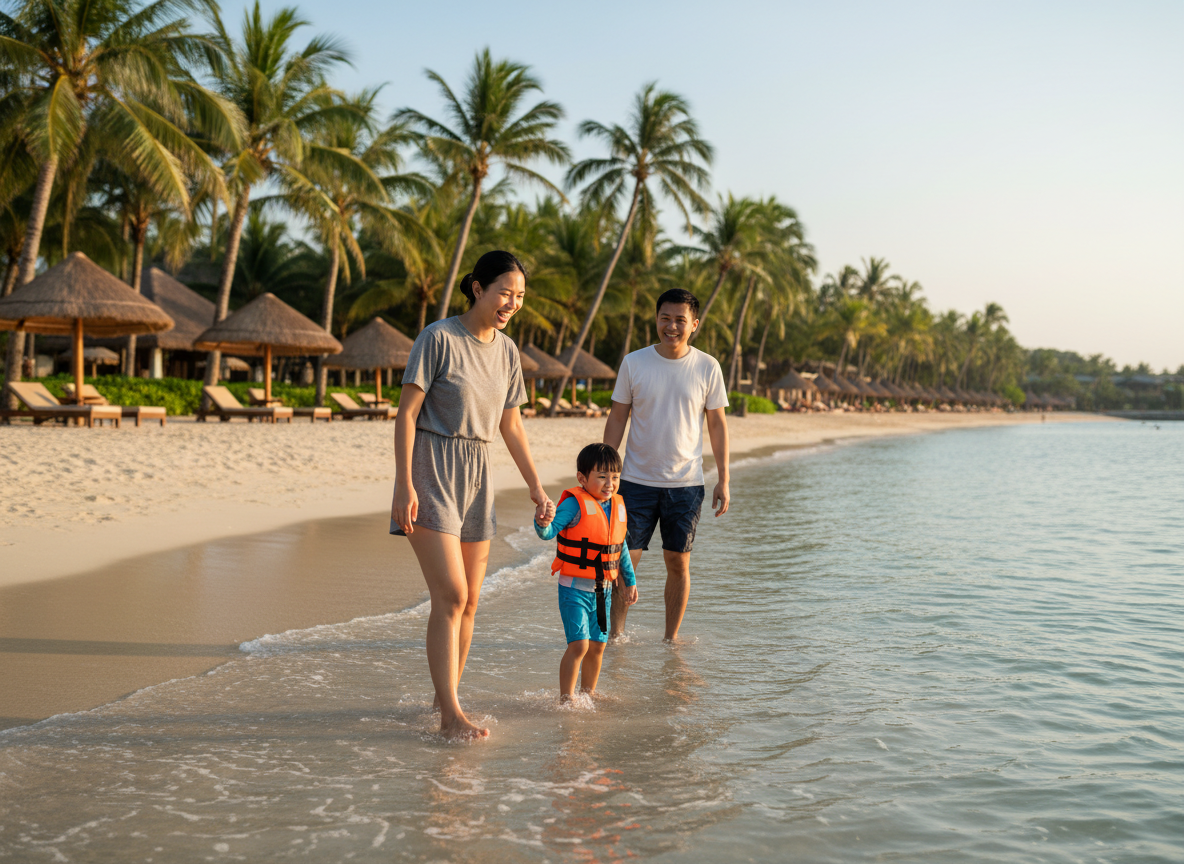
- Leaving children in hot, unshaded water too long.
Safety First

Heat exhaustion in the pool is real, and children are more vulnerable — keep their sessions shorter, shaded and well-hydrated, and never leave a child unsupervised in the water. If anyone feels faint, dizzy or nauseous, get them out, into shade, and cooling down. On the hottest days, an indoor or covered pool is the sensible choice. Train with the weather, not against it.
Frequently Asked Questions
Can you overheat while swimming?
Yes, especially in warm outdoor water during hard efforts, when dehydration is easy to miss.
What water temperature is best for training?
Around 25-27°C suits hard sets. Above 30°C, keep sessions short and rest more.
Do I need sunscreen for swimming?
Outdoors, yes — water-resistant sunscreen and a rash guard, as sun reflects off the water.
When should I swim outdoors in hot weather?
Early morning or evening. Avoid the midday sun for long or intense sessions.
How do I stay hydrated when swimming?
Drink before and after and keep a bottle at the wall. You sweat even when you don’t feel it.
Are indoor pools better in the heat?
On very hot days, covered or indoor pools give shade and steadier temperatures.
Prefer a shaded, supervised swim? Find swimming lessons near you, swimming course options, or private swimming lesson fees at suitable times. Public pools are listed via ActiveSG.
Find swimming lessons near you
Ready to apply what you learned? Compare swimming course options, browse kids’ lessons and adult lessons, or find a coach by town through SwimmingNearMe.sg. For help narrowing the options, send an enquiry or WhatsApp +65 8806 5383.
How This Guide Was Prepared
This article was researched and compiled by the SwimmingNearMe.sg editorial team as part of our Singapore swimming-lesson directory. We link to official sources where relevant and note when a page was last reviewed, in line with our editorial standards. SwimmingNearMe.sg does not guarantee a specific coach, venue or outcome — get in touch to check current availability for the lesson type you need.


Leave a Reply