

Last reviewed: 29 September 2026. SwimmingNearMe.sg is a Singapore swimming-lesson directory and enquiry service — see our editorial standards.
Sentosa Adventure Cove is a water park, not a swimming pool. Most of it can be enjoyed by a non-swimmer wearing a life vest and staying within arm’s reach of an adult. But the snorkelling lagoon, the deeper end of the wave pool, and any attraction where you surface in water you cannot stand in all assume a level of comfort in water that a lot of Singaporean children do not have. Know which is which before you buy the tickets.
I have taught a good number of children whose parents told me, with real surprise, that the child had panicked at a water park. Nobody warned them. Water parks are designed to feel safe, and largely they are — the lifeguarding at the big Sentosa venues is serious. But safe is not the same as suitable. This is what I tell parents before they go.
What kind of water are you actually getting into?
Adventure Cove sits within the Resorts World Sentosa complex on Sentosa Island. Broadly, its attractions fall into four categories, and each asks something different of a swimmer.
| Attraction type | Water you end up in | Ability really needed |
|---|---|---|
| Lazy river / slow current | Shallow, buoyancy aid provided | None, with an adult alongside |
| Children’s play structure | Ankle to knee depth | None |
| Wave pool | Shelves from shallow to out of depth | Comfortable being knocked over and standing back up |
| Body and tube slides | Splash pool at the bottom, often above head height | Able to surface, orient, and move to the side unaided |
| Snorkelling lagoon | Out of depth, face in water | Genuinely comfortable floating and breathing face-down |
The slide splash pools are where I see the most trouble. A child comes down fast, goes under, comes up disoriented and coughing, and there are people behind them. That is not a swimming test, but it is not nothing either.
A simple readiness check
Before the trip, take your child to a normal pool and try this. It takes ten minutes.
- Can they submerge and come up calmly? Face fully under, eyes open or closed, no gasping panic on surfacing.
- Can they recover to standing from a float? Both from front and from back, without help.
- Can they move five metres in water out of their depth? Any way they like. Doggy paddle counts.
- Can they stay calm when water hits their face unexpectedly? Splash them. Watch the reaction, not the words.
- Can they find the wall and hold it? This is the skill that saves people.
Three or more yeses and the park will be fun. Fewer, and stay in the shallow zones, keep a vest on, and stay within arm’s reach. That is not overcautious, it is just accurate. If the answers bother you, that is a reasonable prompt to look at swimming course options or private swimming lesson fees before the school holidays.


Safety at a water park, from a coach’s point of view
The lifeguards are good. They are also watching a large, loud, crowded space with a lot of moving water, and they cannot know that your child is the one who cannot swim.
A few things I would insist on.
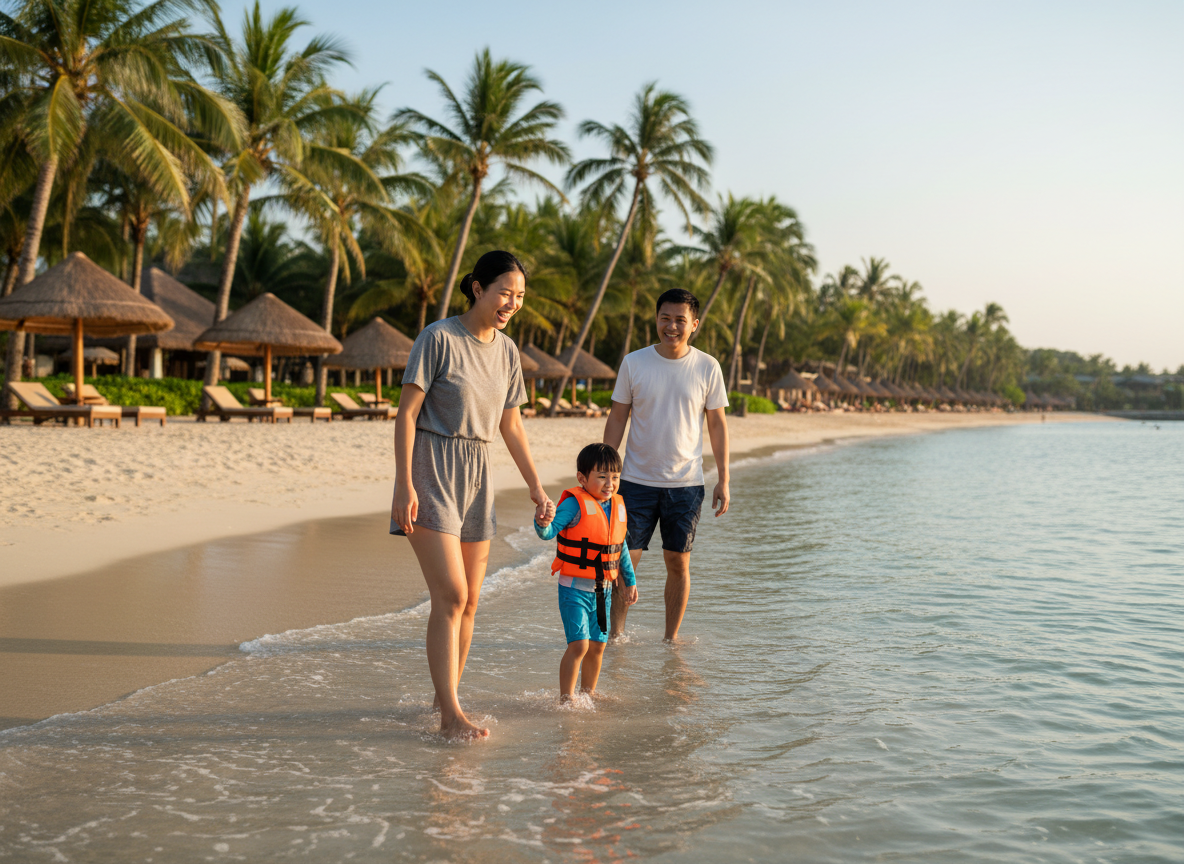
A properly fitted life vest is a safety device. Armbands, floats, rings and inflatable toys are not. They slip, they deflate, and they teach a child a vertical body position that makes real swimming harder later. If the park issues vests, use them, and check the fit at the shoulders — if you can lift it past the child’s ears, it is too loose.
Stay within arm’s reach of a non-swimming child. Not “watching from a chair”. Arm’s reach. Drowning is silent and fast, and it does not look like the films. There is no shouting and no splashing.
Do not let children hold their breath competitively, underwater or anywhere else. Breath-holding games can cause shallow-water blackout, where a swimmer loses consciousness without warning. A water park with a busy splash pool is the last place you want that.
Agree a meeting point before you separate. Sunburn and dehydration will spoil the day faster than anything else; Singapore’s midday sun does not care that you are wet.
And alcohol has no place near water. Not for the adult who is supervising. Ever.
Common mistakes families make
- Assuming a wristband or vest replaces supervision. It does not.
- Treating armbands as safety equipment. They are teaching aids at best.
- Letting a nervous child go down a big slide because a sibling did. Fear at a splash pool is a bad way to end a swimming journey.
- Snorkelling with a child who cannot float face-down calmly. The mask does not make them a swimmer.
- Booking the park as a substitute for lessons. A day of slides teaches nothing about swimming.
- Skipping the toilet-and-water break. Tired, dehydrated children make poor decisions in water.
Frequently asked questions
Do you need to know how to swim at Sentosa Adventure Cove?
Not for most of the park. Life vests are available and much of it is shallow. But the wave pool, slide splash pools and snorkelling area all put you in water you cannot stand in, and those are better with real swimming ability.
Is it suitable for a toddler?
The shallow play areas and the slow river, yes, with an adult in the water alongside. Nothing else.
Can a non-swimmer do the snorkelling lagoon?
I would not. Floating face-down and breathing through a tube is a learned skill, and panicking with a mask on is worse than panicking without one.
Are life vests provided?
The park provides flotation vests for guests. Check the fit yourself rather than trusting the size on the label.
What should I bring?
Rash guard, high-factor sunscreen, water, and a dry set of clothes. A properly fitting swimsuit beats a loose T-shirt in fast-moving water.
How do we prepare a nervous child?
Take them to a quiet local pool a few times first. Familiarity with water on the face is most of the battle. Find a pool near you, or if the fear is entrenched, work with a coach who specialises in it — specialneeds.com.sg covers children who need a slower, adapted approach.
For opening hours, ticketing and current attraction details, check the park’s own site. For general water-safety guidance in Singapore, Sport Singapore is the authority.
A water park is a brilliant reward for a child who can swim. It is a stressful, expensive day for one who cannot. Teach first, then celebrate.
Find swimming lessons near you
Ready to apply what you learned? Compare swimming course options, browse kids’ lessons and adult lessons, or find a coach by town through SwimmingNearMe.sg. For help narrowing the options, send an enquiry or WhatsApp +65 8806 5383.
How This Guide Was Prepared
This article was researched and compiled by the SwimmingNearMe.sg editorial team as part of our Singapore swimming-lesson directory. We link to official sources where relevant and note when a page was last reviewed, in line with our editorial standards. SwimmingNearMe.sg does not guarantee a specific coach, venue or outcome — get in touch to check current availability for the lesson type you need.
Leave a Reply