

Last reviewed: 29 September 2026. SwimmingNearMe.sg is a Singapore swimming-lesson directory and enquiry service — see our editorial standards.
Swimming Targets That Fit the Pool You Can Actually Reach
Most swimming targets fail for one boring reason: they were written for a pool the swimmer never gets to. A good target is built backwards from access — how far the pool is, when the lanes are free, how long you realistically have in the water — and only then from stroke, distance or fitness. Set the schedule first. Set the ambition second.

I have coached people who wrote themselves beautiful twelve-week plans and swam four times in three months. Not because they were lazy. Because the plan assumed a quiet 50m pool twenty minutes away, and the pool they had was a busy 25m one across town with a public session that clashes with dinner.
Start With Access, Not Ambition
Before you decide anything about distance or speed, answer three questions honestly.
- Which pool will you use on a bad week? Not your favourite pool. The one you would still go to when it is raining and you are tired.
- How many minutes are you actually in the water? A one-hour session with travel, changing and a shower is often thirty-five minutes of swimming. Plan for thirty-five.
- Who else is in that lane? A crowded public lane is not the place for a timed set. It is a fine place for technique work.
Everything downstream depends on those answers. Your swimming targets are a negotiation with your calendar, not with your ego.
Choosing the Right Kind of Target
Different goals need different pool conditions. Matching them is most of the work.
| Target type | What it needs | Works in a busy public lane? | How to measure it |
|---|---|---|---|
| Technique (catch, body position, breathing) | Short repeats, frequent stops | Yes — this is the best use of a crowded pool | Stroke count per length |
| Continuous distance | Uninterrupted lane space | Sometimes, if you swim to the side | Longest unbroken swim |
| Speed / intervals | Clear lane, a pace clock | Rarely | Time per repeat, rest taken |
| General fitness and weight management | Consistency more than conditions | Yes | Sessions completed per month |
| Open-water preparation | Space to sight and swim straight | No | Lengths swum without touching the lane rope |
If your only realistic pool is a busy one, stop trying to build a speed target there. Build a technique target instead. You will get faster anyway, because drag falls before fitness rises.
A Four-Step Method for Writing a Target
- Name the constraint. “Two sessions a week, thirty-five minutes each, 25m pool, shared lane.”
- Pick one primary target. One. Not four. For example: swim 400m continuously without stopping.
- Write the weekly evidence. What would tell you, this week, that you are moving? “Swim 8 × 50m with 20 seconds rest and keep my stroke count under 22.”
- Set a review date, not a deadline. Eight weeks out, look at what happened. Then adjust the target. Deadlines punish; reviews inform.
Common Mistakes I See Every Season
- Chasing distance before position. Swimming 1km with sinking legs just builds a tired, badly shaped swimmer.
- Measuring only time. Stroke count tells you far more about your swimming than the clock does in the first year.
- Setting a weight-loss number as the swimming target. Body weight moves for reasons that have nothing to do with your training. Make the target a swimming behaviour — sessions attended, distance held, technique improved — and let health outcomes follow. If weight management is a genuine medical concern for you, that conversation belongs with a doctor or a registered dietitian, not with a swim coach.
- Treating a missed week as failure. It is data. It usually means the target ignored something real in your week.
- Practising breath-holding to “build lung capacity”. Do not. Repeated hypoxic work and long underwater distances carry a risk of shallow-water blackout, which can drown a strong swimmer silently and without warning. Never do it alone, never do it without a coach watching, and never treat it as a training target.
- Copying an elite programme. Their pool is empty at 5am. Yours is not.

What Progress Actually Looks Like
Progress in swimming is lumpy. You will spend three weeks feeling like a plank and then, on a Tuesday, something clicks and you take two strokes off your length. That is normal. It is also why a target measured weekly beats a target measured daily.
Track three things and nothing else: sessions completed, stroke count over a fixed distance, and your longest unbroken swim. Write them in the same notebook or the same app every time. Three numbers you actually record beat fifteen you intend to.
Safety Around Your Targets
A target should never push you past your competence in the water. Swim where a lifeguard can see you. If you are pushing distance for the first time, stay in a lane, not the middle of an open pool. Get out if you feel dizzy, unusually breathless, or if you get any chest discomfort — that is a stop-and-seek-help sign, not a push-through sign.
Shoulder or knee pain that appears during a stroke and stays afterwards means the target changes, not the tolerance. See a physiotherapist. Swimming through joint pain reliably turns a six-week problem into a six-month one.
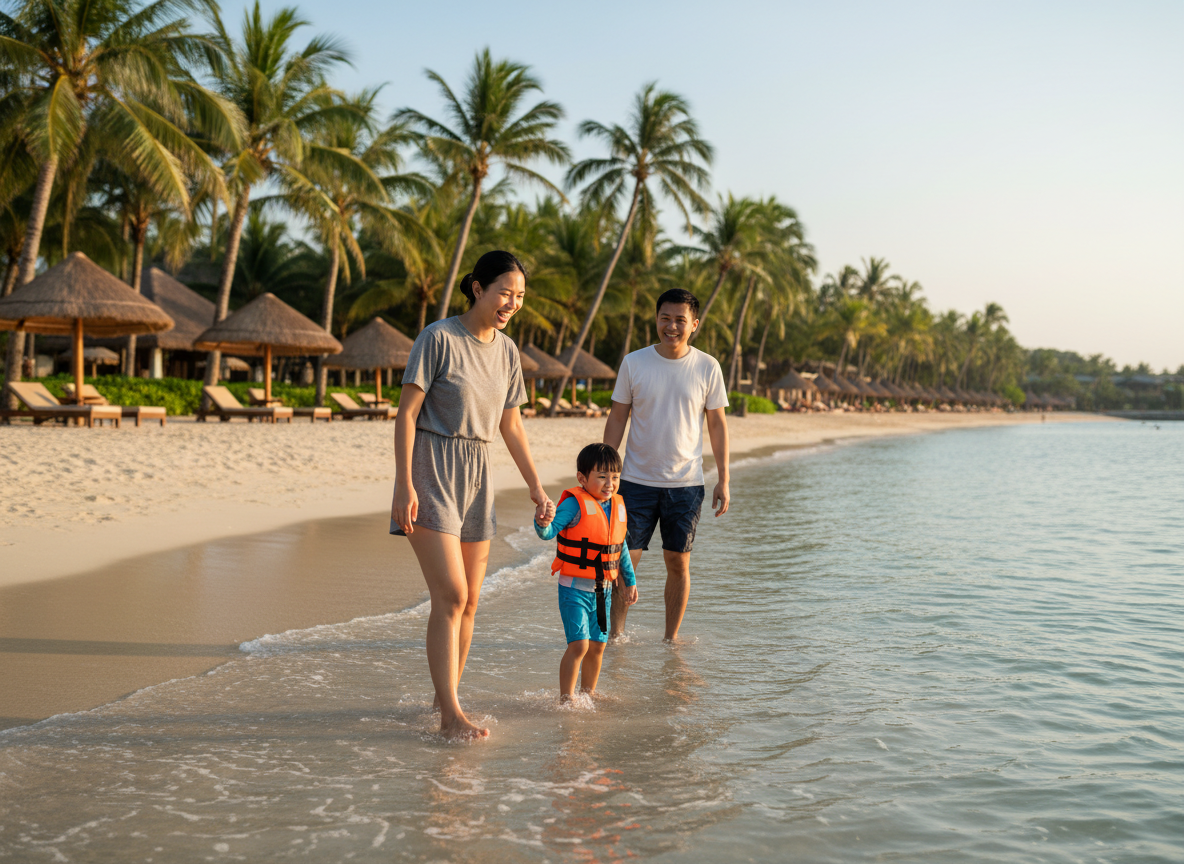
If children are training alongside you, remember that flotation aids are teaching tools, not safety devices. An adult who can swim should be watching, in the water or at arm’s reach.
Finding a Pool Worth Building Targets Around
The best pool for your swimming targets is the one you will still walk into in month four. Public pools run by ActiveSG are the backbone of most swimmers’ weeks here, and Sport Singapore publishes the wider programme picture. If your building has water, a session in a condo swimming lessons in Singapore beats a skipped session at a better facility.
If the target is a stroke you cannot yet swim, targets will not fix that — teaching will. A short block of private swimming lesson fees is usually cheaper than a year of guessing, and a coach who watches you swim once will tell you more than any plan. For structured technique work, find a swimming coach near you can build the set around whatever pool you have. Parents setting targets for children should look at swimming course options first, where progression is already sequenced.

Frequently Asked Questions
How long should a swimming target run before I change it?
Six to eight weeks is enough to see whether the target fits your week. Shorter than that and you are reacting to noise. Longer and you are stubborn.
Should my swimming target be a distance or a time?
For your first year or two, distance and stroke count. Times reward fitness; stroke count rewards technique, and technique is what actually limits most adult swimmers.
Can I set swimming targets if I can only swim once a week?
Yes, but make it a technique target. One session a week will not build much aerobic fitness, and pretending otherwise leads to disappointment. It will absolutely improve your stroke if the session is deliberate.
Is swimming a good target for weight management?
Swimming is excellent exercise and easy on the joints, which is why people stay with it. But make the target the swimming, not the scale. Any specific weight or dietary plan should come from a doctor or dietitian who knows your history.
My pool is always crowded. Is it worth going?
Yes. Crowded lanes are poor for intervals and excellent for drills, sculling, kick with a board and stroke-count work — precisely the things most swimmers skip.
How do I know whether I am improving if I have no coach?
Fix a distance, say 100m. Count your strokes and note your effort. If, months later, the same distance takes fewer strokes at the same effort, you are improving. That is the whole test.
The Short Version
Swimming targets work when they are honest about water access and modest about ambition. Pick the pool you will really use, decide how many minutes you really have, choose one target that fits those conditions, and measure it weekly. Then let the target change when your life does. That is not weakness. That is how people are still swimming in year three.
Find swimming lessons near you
Ready to apply what you learned? Compare swimming course options, browse kids’ lessons and adult lessons, or find a coach by town through SwimmingNearMe.sg. For help narrowing the options, send an enquiry or WhatsApp +65 8806 5383.
How This Guide Was Prepared
This article was researched and compiled by the SwimmingNearMe.sg editorial team as part of our Singapore swimming-lesson directory. We link to official sources where relevant and note when a page was last reviewed, in line with our editorial standards. SwimmingNearMe.sg does not guarantee a specific coach, venue or outcome — get in touch to check current availability for the lesson type you need.

Leave a Reply